

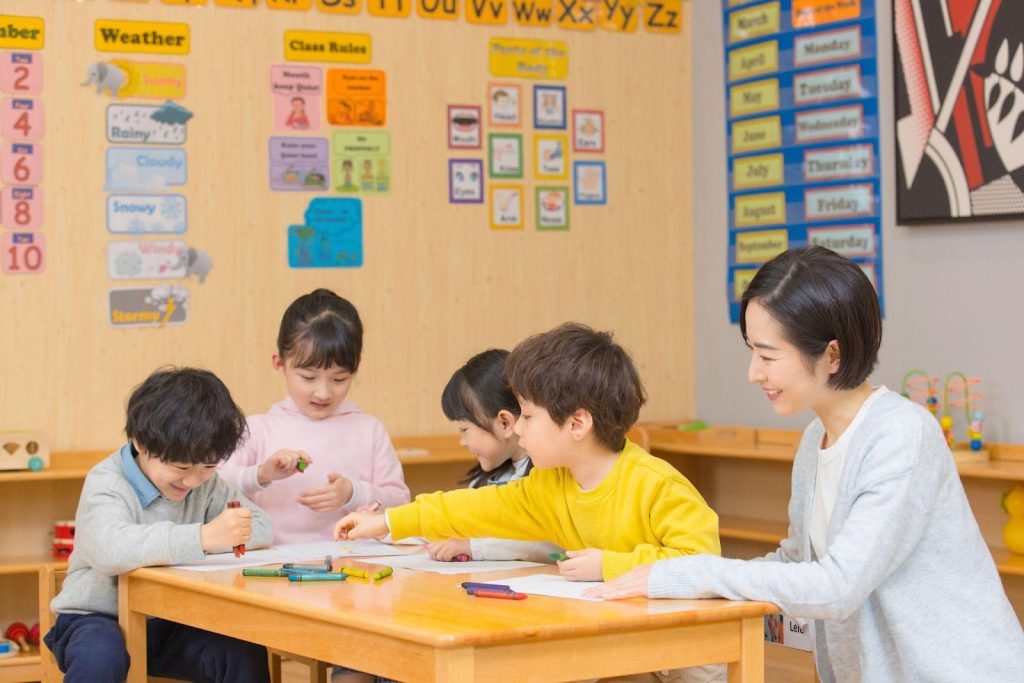
Uncertainty around early language learning rarely comes from a lack of care. It comes from not knowing what progress should look like at the preschool stage. Parents reviewing options for a Chinese curriculum for preschoolers often feel pressure to make the right choice early, fearing that a misstep could slow development later. This pressure leads many families to prioritise visible outcomes or familiar academic signals rather than how young children actually acquire language. Assumptions about speed, structure, and results then guide decisions about Chinese tuition, even when those assumptions do not reflect preschool learning realities. Over time, these beliefs influence how programmes are chosen and how progress is interpreted, shaping a child’s first relationship with Chinese in subtle but lasting ways.
1. A Structured Curriculum Means Academic Pressure
Structure is frequently mistaken for rigidity. Parents may worry that a defined Chinese curriculum for preschoolers mirrors formal classroom learning and introduces unnecessary pressure. In practice, structure provides direction rather than constraint. It establishes a learning sequence, determines how frequently concepts are revisited, and ensures skills are built progressively. Chinese tuition at the preschool level relies on repetition through play, stories, movement, and guided interaction. Without structure, exposure becomes scattered, making it harder for children to connect sounds, meanings, and usage consistently as they grow.
2. Preschool Chinese Learning Should Focus On Reading Early
Another common assumption is that early reading ability proves programme effectiveness. Parents may look for visible literacy milestones as reassurance. Preschool Chinese learning, however, prioritises listening accuracy, sound differentiation, and comprehension before formal reading begins. A Chinese curriculum for preschoolers develops tone awareness, sentence rhythm, and contextual understanding first. These foundations support later reading and writing. Introducing literacy demands too early can overwhelm children who are still building the auditory skills necessary for confident language use.
3. Exposure Alone Is Enough At Preschool Age
Some families rely on songs, videos, or casual phrases as substitutes for structured learning. While exposure builds familiarity, it does not guarantee progression. Preschool Chinese curricula guide repetition, elicit response, and reinforce usage across settings to transform exposure into knowledge. Chinese tuition provides continuity that passive exposure cannot maintain on its own. Without this structure, children may recognise sounds but struggle to respond meaningfully or retain what they hear over time.
4. Native-Speaking Environments Are Required For Progress
Families from non-Mandarin-speaking households sometimes assume preschool Chinese programmes are designed primarily for native speakers. This belief discourages early enrolment. In reality, an effective Chinese curriculum for preschoolers supports mixed-language backgrounds. Visual prompts, gestures, repetition, and contextual cues allow children to learn without relying on home language exposure. Chinese tuition at this stage focuses on accessibility, ensuring that all learners can participate comfortably regardless of prior familiarity.
5. Enjoyment And Learning Are Separate Goals
Some parents view play-based activities as entertainment rather than education. This raises the worry that academic value is diminished by enjoyment. For preschoolers, engagement supports memory and retention. Play, storytelling, and interaction are used in a Chinese preschool curriculum to naturally anchor vocabulary and sentence structures. Chinese tuition becomes more effective when children associate language with comfort and curiosity. Removing enjoyment often reduces participation and weakens consistency, making learning less sustainable.
6. Progress Should Be Clearly Measurable Early On
Parents often expect visible improvement within a short timeframe. When progress appears subtle, confidence in the programme may decline. Preschool language development unfolds gradually through accumulation. A Chinese curriculum for preschoolers shows impact through improved listening accuracy, quicker response, and growing comfort with sounds before fluent speech emerges. Chinese instruction facilitates this process by gradually increasing exposure rather than hastening production.
Conclusion
Early Chinese learning is shaped as much by expectations as by instruction. When assumptions drive programme choice and evaluation, progress can feel uncertain even when learning is taking place. A clearer understanding of how preschoolers absorb language shifts attention away from speed and visibility toward consistency and foundation-building. With aligned expectations, a Chinese curriculum for preschoolers supports language development in a way that feels natural, stable, and sustainable across early childhood.
Contact Tien Hsia Language School to explore how a thoughtfully structured Chinese curriculum for preschoolers supports early language development and how Chinese tuition can be aligned with realistic learning progression.